
Choosing a new water heater is an important decision, and today’s homeowners have more efficient options than ever. Heat pump water heaters and tankless water heaters are two popular choices, each offering unique benefits. Understanding how these systems work and what they require can help you choose the best fit for your home’s hot water needs.
How Heat Pump Water Heaters Work
Heat pump water heaters use electricity to move heat rather than generate it directly. They draw heat from the surrounding air and transfer it to the water tank. This process enables the system to produce hot water with lower energy consumption than traditional electric models.
These systems work best in spaces with adequate airflow and moderate temperatures. Because they store hot water in a tank, they are well-suited for households with predictable daily hot water use and the space to accommodate the unit.
What Makes Tankless Water Heaters Different
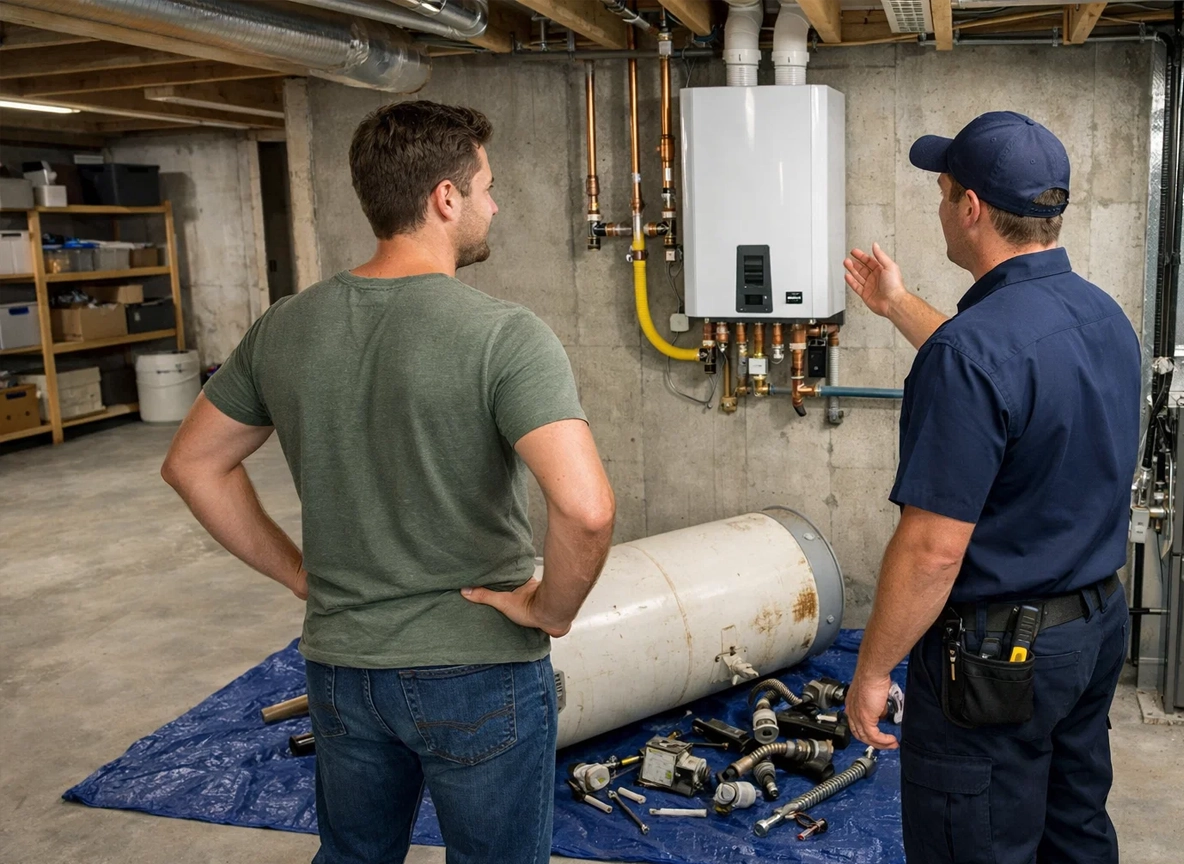
Tankless water heaters heat water on demand instead of storing it. When a hot water tap is turned on, the system activates and heats the water as it flows through the unit. This supports strong energy efficiency and can help homeowners save energy compared with a conventional storage tank water heater, with the U.S. Department of Energy noting gains of up to 34% and typical improvements of 24%–34% in homes using 41 gallons or less per day.
Unlike tank models, gas tankless water heaters avoid standby losses, though some natural gas units with a pilot light can offset part of those savings.
Tankless systems are ideal for homes that want continuous hot water and a compact installation. They can be especially useful where space is limited, making them suitable for indoor installation with a space saving design, or where hot water usage varies throughout the day. Output depends on the flow rate, and one unit may not fully cover simultaneous demand from a shower and dishwasher, especially in larger homes.
Comparing Efficiency and Performance
Both heat pump and tankless water heaters are designed with efficiency in mind, but they achieve it in different ways. Heat pump models reduce energy use by transferring existing heat, while tankless systems avoid heating unused water, though purchasing and installing these tankless models is generally more expensive upfront than a conventional storage unit and can cost more to purchase and install than a traditional tank heater
Performance depends on your household’s hot water habits. Homes with steady, moderate demand may benefit from a heat pump system, while those with intermittent or high-demand usage may prefer tankless technology for its on-demand operation.
The right model depends on household hot water habits and other factors, and while tankless models often cost more at the start, their lower long-term energy costs can save money over time.
Installation and Space Considerations
Installation requirements can influence which option is right for your home. Heat pump water heaters need sufficient space and airflow to operate efficiently. To install a tankless system properly, requirements can vary by model, with condensing units using a heat exchanger to capture and reuse exhaust gases for higher efficiency, while non condensing units do not, and condensing systems also need different venting and a condensate drain. Local climate and regional code requirements also affect what is suitable in Southern California, where groundwater temperatures typically stay around 60°F to 70°F year-round and condensing gas units must meet strict Ultra-Low NOx standards in the South Coast Air Quality Management District.
A professional evaluation helps determine which system integrates best with your existing plumbing and utility setup, so contact a qualified installer to review gas, electrical, venting, and placement settings for your home
Common Habits That Shorten Water Heater Lifespan
Regardless of the system you choose, a tankless water heater typically has a longer life expectancy than a traditional storage tank, which often lasts about 10–15 years. Using harsh chemicals in drains, ignoring small leaks, and postponing routine inspections can all lead to premature wear, while proper maintenance and having the unit regularly maintained can help extend its service life and preserve energy efficiency. In hard-water areas, routine flushing or descaling is especially important, and Riverside tap water averages about 11 grains per gallon. Addressing minor issues early and relying on professional service helps protect your investment and maintain performance. Some units also include replaceable parts that support long-term quality and reliable performance.
Making the Right Choice for Your Home
The right water heater depends on available space, household size, desired hot water supply, and whether a demand water heater is the right fit for your home. The right model should also match your available gas or electric power, expected run time, and installation needs. Comparing options with a knowledgeable professional ensures you understand the benefits and limitations of each system before making a decision. Some high-efficiency models may also qualify for incentives, including a $600 Federal Energy Efficient Home Improvement Credit when you upgrade to an Energy Star certified tankless model with a UEF of 0.95 or higher.
Get Expert Guidance from Hush Air Heating & Air Conditioning
Choosing between a heat pump water heater and a tankless system doesn’t have to be complicated. Hush Air Heating & Air Conditioning provides professional evaluations, guidance on advanced features, and expert installation services backed by industry experience to help homeowners select the right solution.
Check each review before you decide, as many customers see professional installation as highly recommended.
Contact the team today to get help choosing the right model and installation plan, and enjoy reliable hot water with confidence.
Contact Hush Air Heating & Air Conditioning today to discuss your options and enjoy reliable hot water with confidence.